


The Tenth Time I Tried to Stay Alive
On conditional love, an absent father, hypervigilance, and learning to become my own loving parent.
I lost track somewhere after the fifth psychiatric admission. Each one followed the same shape: a self-inflicted injury, a doctor asking why I wanted to kill myself, and me wishing I had the straight answer they wanted. By the third, it had become routine — the industrial cleaner smell, the cold corridors, a few days of observation before I was sent back into the exact life that had landed me there. Hitting bottom became familiar. We were on speaking terms.
This isn’t really a piece about suicide. It’s about what happens after, and about where I’ve come to believe the “why” actually starts.
For a long time I couldn’t answer that honestly. I’d list the trauma, the failed relationships, the chronic depression, the anxiety attacks that hit most mornings before I’m even out of bed. All true. But underneath it was something harder to say: I grew up in a home where love came with a passing grade, and I rarely made it. I still remember coming home thrilled about a mark I’d been given, only to be asked why it wasn’t the higher one — that anything less than best made me a failure, and failures don’t get to be loved. I was about ten the first time I decided I was more trouble than I was worth to the people who should have loved me regardless. My father wasn’t around to complicate that story either way — he came back into my life, in pieces, only in the last decade, and I still haven’t made peace with it.
What all of it taught me was to never trust the good thing. More than once as an adult, I’ve been handed good news, a gift, a stretch of things going right, and instead of relief, I’ve felt my whole body go on alert, scanning for how it would be taken away. I eventually put a name to it: a chronic state of hypervigilance and catastrophising. It made sense once I traced it back far enough. When the people who are supposed to show up for me consistently don’t, trust like that stops forming as a category at all. I learned to brace instead. Always.
That bracing shaped how I related to a Higher Power, too. As a kid, when I asked why my father wasn’t around, I was told God would be the father who never let me down. I spent years quietly furious at a God who felt exactly like that promise — present enough, in other people’s stories, to prove he existed; absent enough in my own life that I couldn’t build anything on him.
My mother died a few months prior to me coming into recovery, before either of us had finished making sense of each other. That’s its own grief, one nobody warned me about — mourning someone who was both the wound and the person I most wanted to show I’d healed it for.
I try to journal daily and meditate most mornings. I go to my ACA meetings, even the ones I still sometimes resent going to. I take my medication, ration my time on social media, get some actual sun, move my body when the last thing I want to do is move. Tedious, undramatic things. When I skip them, I decline fast.
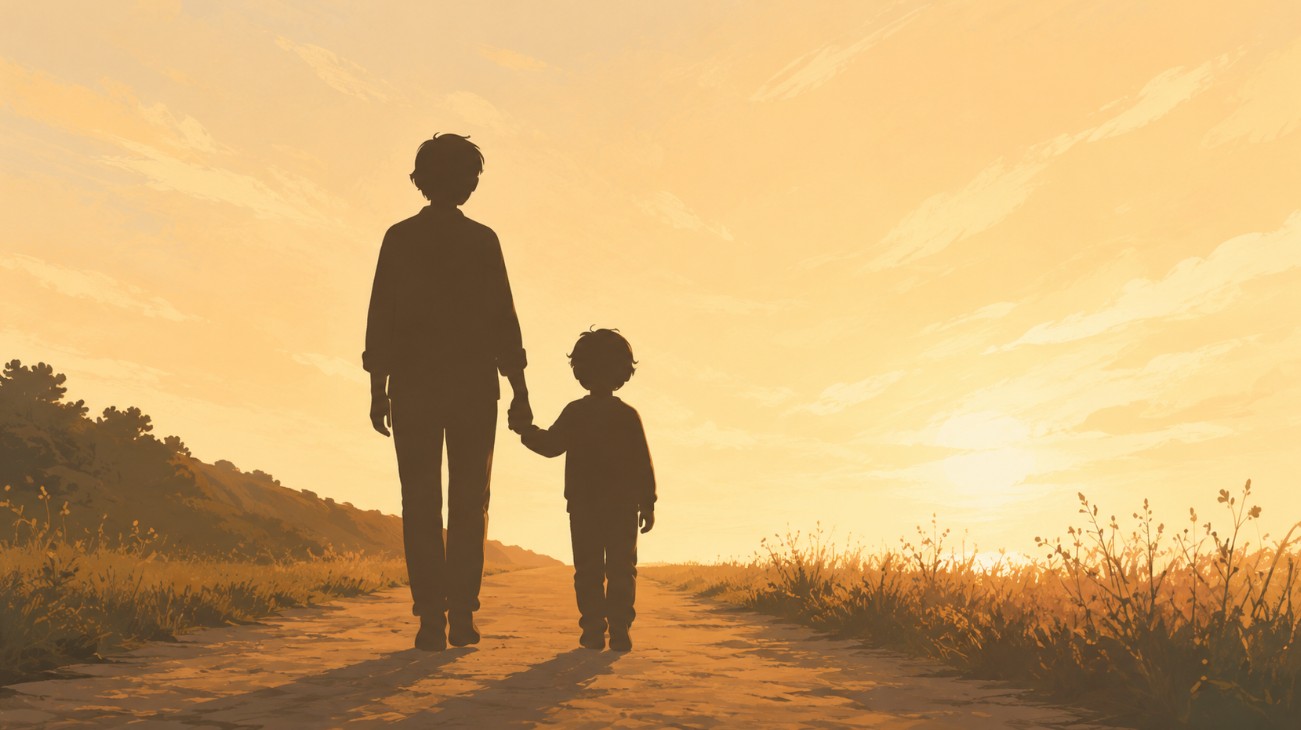
Part of my program now is writing to myself the way a loving parent would — the reassurance I didn’t get the first time, signed the way I wish someone had signed one to me once. It doesn’t erase the hypervigilance. It gives me somewhere to put it besides despair.
Last year, without any event I can point to, I went more than two months without a single thought of ending my life — the longest stretch since I was twelve. Nobody rescued me. I’d just kept doing the unglamorous things: meetings, medication, inner-child work that felt ridiculous until it stopped feeling ridiculous. Some months later I was back in it, telling the people closest to me I didn’t want to live anymore — not a plan, more a verdict I’d handed down on my life and kept living inside of anyway. “I don’t want to live” and “I am going to end my life” aren’t the same sentence, and a lot of us stay quiet about the first because we’re afraid it’ll be heard as the second.
What’s kept me here isn’t one insight or one meeting. It’s the accumulation of small disciplines repeated past the point of caring whether they work: the meeting I didn’t want to attend, the sponsor I called out of habit more than faith, the slow, ongoing work of parenting myself in the ways I wasn’t parented.
I’m not writing this because I’ve beaten anything. I’m writing it because I’m still here to write it, which was never guaranteed, and because I suspect I’m not the only adult child in these rooms who’s gone two months without wanting to die, landed back at zero without warning, and needed reminding that the two months still counted. The work continues — not because the old wounds have healed clean, but because I keep, stubbornly, choosing to be the parent I needed instead of the one I got. Most days, that’s enough.